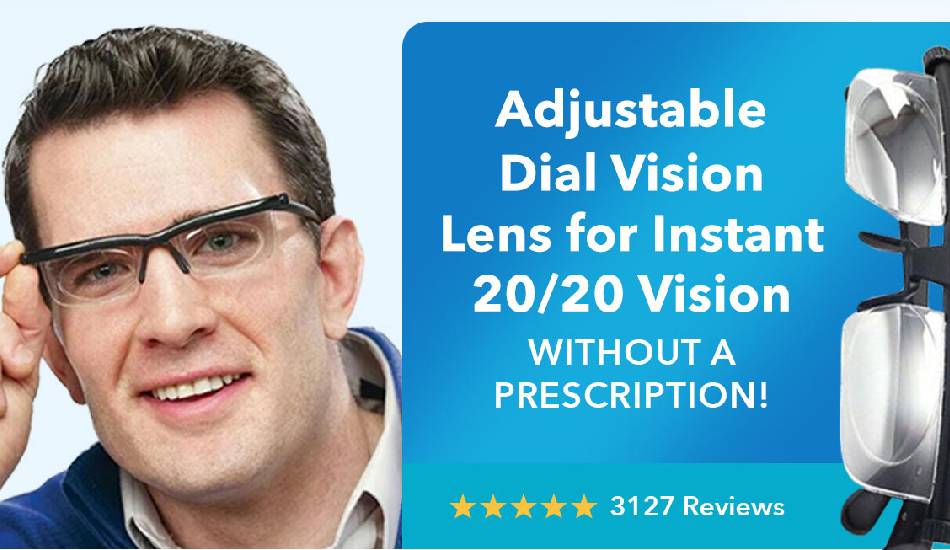
If you're juggling reading glasses, computer glasses and distance glasses, adjustable-focus eyewear can look like an easy answer. It can be — for the right person and the right situations. Here's how the three main options compare.
Side-by-side comparison
| Readers | Adjustable glasses | Prescription | |
|---|---|---|---|
| Focus | One fixed strength | You tune it with a dial | Custom for your eyes |
| Each eye separately | No | Yes | Yes |
| Astigmatism | No | Usually no | Yes |
| Best for | Occasional close reading | Switching tasks, spare pair | All-day wear, complex needs |
How adjustable glasses work
Most use a small dial on each arm. Turning it moves or reshapes lens elements — or, in fluid-filled designs, changes the lens curve — so you can find a sharp focus at different distances.
Where they shine
- Task switching: reading, laptop and across-the-room in one frame.
- Uneven eyes: each side adjusts independently.
- Backup pair: handy in the car, at the office or in a travel bag.
Where they fall short
- A limited range of strengths.
- Most don't correct astigmatism.
- A smaller sharp viewing area than custom lenses.
- Bulkier frames because of the mechanism.
Adjustable glasses are a convenience, not a replacement for an eye exam or prescription from an eye care professional.
Quick setup guide
- Cover one eye and turn its dial until text is crisp.
- Repeat with the other eye.
- Readjust whenever you switch from reading to screens or distance.
- Clean with a microfiber cloth only.
Bright days and glare
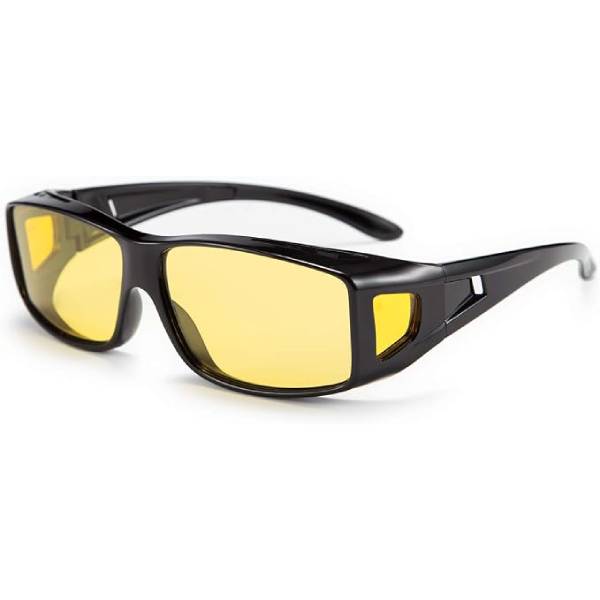
Focus and glare are separate issues. If you already wear glasses, polarized fit-over sunglasses slide right over them — useful for driving into a low winter sun.
See an optometrist or ophthalmologist right away for sudden vision changes, eye pain, flashes of light or new floaters. Regular eye exams help track how your vision changes over time.