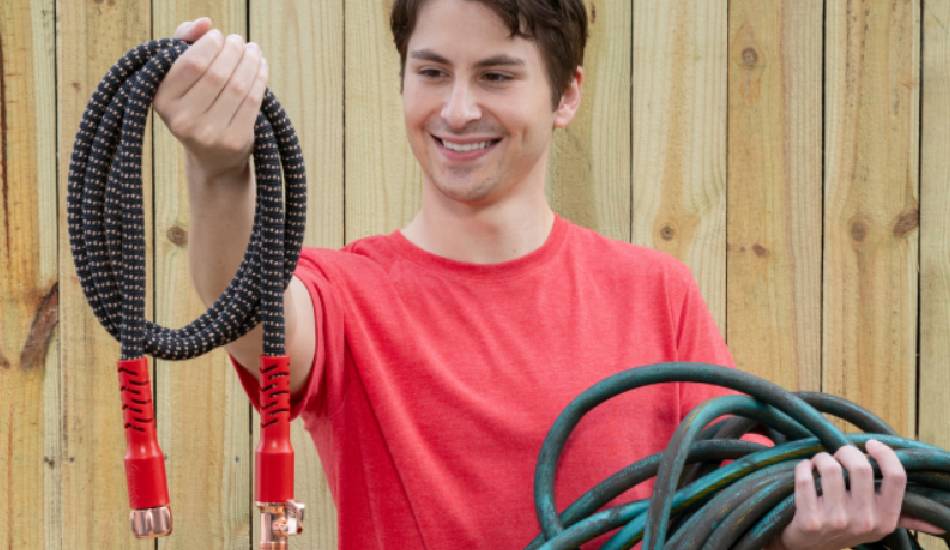
Expandable garden hoses like the Pocket Hose Copper are a favorite for good reason: they're light, compact and don't kink. But Midwest weather — humid summers, sudden storms and deep winter freezes — puts them through a lot. Here's a routine that matches the seasons.
Your seasonal checklist
| Season | What to do |
|---|---|
| Spring | Inspect the outer fabric, replace worn connector washers, and turn the water on slowly for the first use. |
| Summer | Drain after every use, store out of direct sun, and never leave the hose pressurized. |
| Fall | Soak the nozzle in vinegar to clear mineral buildup and wipe the fittings clean. |
| Winter | Drain completely, disconnect from the spigot and store indoors before the first freeze. |
Why pressure is the big one
An expandable hose works by stretching an inner tube. A sudden rush of full pressure, or hours of being stretched with the nozzle closed, wears that tube out fastest. Always:
- open the spigot gradually,
- shut water off at the spigot — not just the nozzle — when you're done,
- squeeze the nozzle to release remaining pressure before storing.
If your home's water pressure is high, an inexpensive inline pressure regulator can noticeably extend hose life.
Caring for copper fittings
- Check the rubber washer in the female connector each spring.
- Hand-tighten only; wrenches can crush washers and strip threads.
- Keep threads free of dirt and grit.
- Patina is normal on copper and doesn't affect the seal.
Storage that helps
A shaded hook, a hose pot or a lidded bin all protect against UV. Avoid sharp edges, thorny shrubs and rough concrete, and don't let pets treat the hose as a chew toy.
Winter is non-negotiable
Water left in the hose can freeze and split the inner tube — and Illinois winters reliably dip below freezing. Before the first hard frost, drain it fully, let it dry and bring it inside.
Notice a bulge or uneven expansion? Stop using the hose and inspect it before it fails.